Traffic Signals, Crashes, and Intersection Safety in Omaha
If you drive in Omaha, you probably know this unnerving feeling: sitting at a light, wondering whether the car coming the other way is actually going to stop. That everyday unease turned into heartbreak this July when a crash at 114th Street and West Center Road killed two children who were brothers and left two adults with life-threatening injuries.
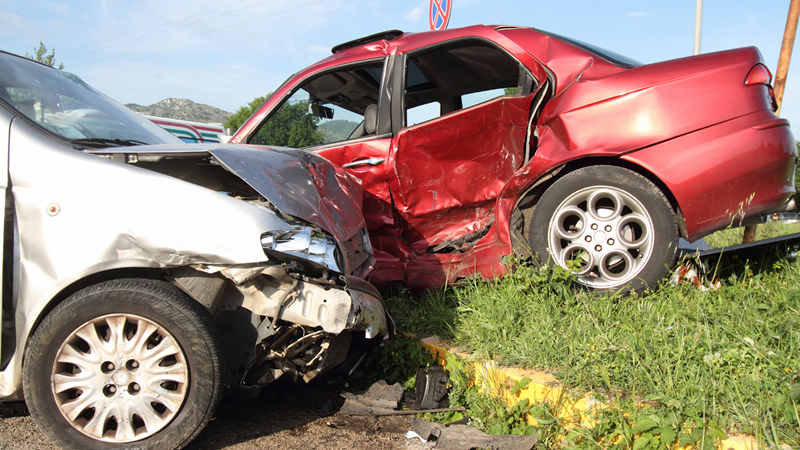
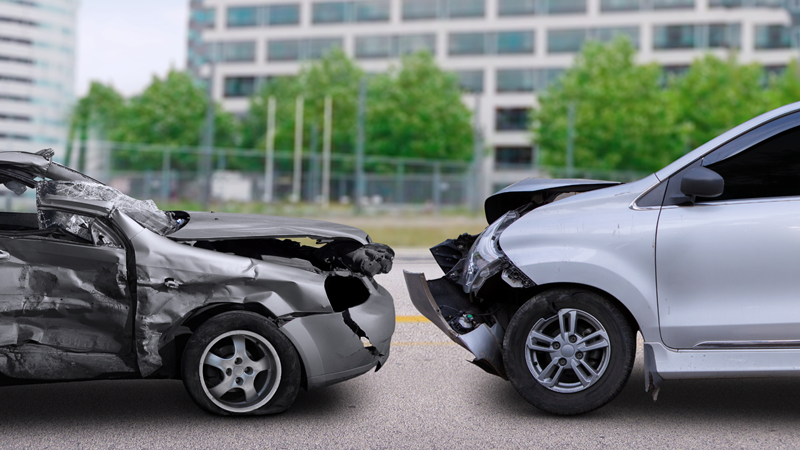
Investigators say a driver was speeding and impaired when his vehicle struck a Subaru turning off West Center Road, tearing the smaller car in half. In the aftermath, attention turned to the intersection itself and what could make it safer.
It is a painfully familiar pattern. A tragedy happens, a community grieves, and everyone asks the same question: could a change to the traffic signal have prevented this? It is a fair question, and the actual answer is more complicated than most people expect. So let's talk about what traffic signals actually do, what they don't, and how it all plays out across Omaha and Nebraska.
What Happened at 114th and West Center Road
The July crash brought several dangerous factors together at once: high speed, alcohol, and a turning vehicle crossing the path of oncoming traffic. Court records indicate the striking vehicle was traveling far above the speed limit moments before impact, and prosecutors have described a combination of alcohol and another substance as contributing to the wreck.
It was not the first serious collision on this stretch of West Center Road, which has seen other fatal crashes, including a
deadly multi-vehicle wreck near 81st Street earlier in the summer when a driver crossed the median.
When one happens at a signalized intersection, the public reasonably wonders whether signal timing or design played a role, and answering that means understanding what a signal is actually built to do.
Do Traffic Signals Actually Reduce Crashes?
Here is something most drivers assume that simply isn't true. According to the Nebraska Department of Transportation, installing a traffic signal does not automatically reduce crashes. NDOT is direct about it: the widespread belief that a new signal makes an intersection safer overall is, in their words, false.
A signal can reduce certain crash types, particularly right-angle or "T-bone" collisions, but it typically increases others, especially rear-end crashes, as drivers stop short when a light changes.
That trade-off is why engineers don't just drop a signal in wherever the public asks. State and federal law require a traffic engineering study first, weighing traffic volume, turning movements, pedestrian counts, approach speeds, and crash history against the nine formal "warrants" in the federal Manual on Uniform Traffic Control Devices.
Even when an intersection meets a warrant, NDOT notes a signal still may not be the right fix, and it isn't cheap: a standard new permanent signal in Nebraska has ranged from roughly $150,000 to $300,000. Most sobering of all, signals are no cure-all for fatalities. NDOT reviewed five years of state data and found that one out of every fifteen traffic deaths in Nebraska occurred at a signalized intersection. A green light is not a guarantee of safety.
Why Intersections Are Where So Many Serious Crashes Happen
Intersections concentrate risk because they are where paths cross and conflict points multiply. The Federal Highway Administration estimates that roughly
a quarter of all traffic fatalities and about half of all traffic injuries in the United States are tied to intersections. Signalized intersections carry their own distinct danger: they account for about one-third of all intersection fatalities, and a large share of those involve red-light running, with FHWA figures showing those deaths climbing in recent years.
Omaha's own data reflects this. Through its Vision Zero planning, the city has documented that more than 62 percent of fatal and serious injury crashes happen at intersections and that half of all fatal and serious injury crashes occur on just six percent of the city's roads. Those numbers are why corridors like West Center Road, Dodge Street, and Ames Avenue keep drawing engineers' attention.
The Left Turn: A Small Maneuver With Outsized Danger
If you want to understand why intersection crashes are so often severe, look at the left turn. The West Center Road tragedy involved a vehicle turning across the path of oncoming traffic, a scenario known formally as a left-turn-across-path/opposite-direction crash, and one of the most dangerous movements a driver makes.
Insurance and safety data bear this out. Nationwide reports that left-turn collisions are, after rear-end crashes, among the most frequent high-severity auto claims it receives, precisely because they tend to become near head-on or T-bone impacts, often at speed. Most happen at the end of a green light, when a driver turns assuming oncoming traffic will stop. Drivers also routinely misjudge the speed of oncoming vehicles, and larger vehicles like trucks can create a "speed-size illusion" that makes them appear slower than they are.
Real-world driving data adds another layer. The Driver Research Institute, analyzing footage and sensor data from a large naturalistic driving study, found that when an oncoming car was already moving and didn't stop first, drivers responded within about a second, but when a car had been stopped and then suddenly turned, average reaction time stretched to 1.6 seconds or more because drivers assumed the stopped vehicle would wait for a safe gap.
Vehicle and signal design try to close that gap. A
National Highway Traffic Safety Administration analysis of crash data from seven states found that amber (rather than red) rear turn signals were associated with a modest reduction, estimated at roughly 3 to 28 percent, in the odds of being struck while turning, merging, or changing lanes.
Meanwhile, Omaha has been deploying flashing yellow arrows and improved sensors as it retimes signal corridors. Those arrows confuse a lot of drivers: a flashing yellow arrow means you may turn left, but oncoming traffic has a green light and the right-of-way, so you must yield and wait for a safe gap, while a steady yellow arrow means the light is about to turn red.
The Bigger Nebraska Picture
Nebraska’s traffic fatality numbers show the broader risks drivers face across the state. In 2024, the state recorded 251 traffic deaths, its highest total in nearly two decades, a figure worth sitting with alongside
what the state's monthly fatality data reveals about where and how these crashes keep happening.
Douglas County, home to Omaha, consistently records the state's highest crash totals because of its traffic volume. When a serious crash happens at an Omaha intersection, more than one party may share fault. The impaired or speeding driver is the obvious starting point, but questions about signal timing, sight lines, and known hazards at a documented high-crash corridor can also matter, and those often require early investigation to answer.
You can also check the specific scope for wrongful death claims, since it turns on exactly this kind of layered analysis, thus shedding more light to the matter.
Frequently Asked Questions About Intersection and Signal Crashes
Does a green light mean the other driver was automatically at fault?
Not necessarily. Right-of-way is one factor, but fault depends on speed, impairment, whether a driver yielded on a turn, and other circumstances that require investigation.
Can a traffic signal problem make the city or state responsible for a crash?
Sometimes. If a documented signal or design hazard contributed to a crash, a public entity's responsibility may become relevant, though claims against government entities in Nebraska carry short notice deadlines.
Are left-turn crashes usually the turning driver's fault?
Not always. If an oncoming driver was speeding or impaired, or a view was obstructed, fault can be shared, which is why the full context of the crash matters.
Harris & Associates Can Guide You After a Crash in Omaha
Traffic signals are essential tools, but they are not magic. As NDOT itself makes clear, a signal can trade one kind of crash for another and cannot eliminate fatalities on its own, and both federal and local data confirm that intersections remain among the most dangerous places on our roads. Speed, impairment, and misjudged left turns turn those conflict points into tragedies, as families in Omaha have learned far too often this year.
If you or someone you love has been hurt, or if you have lost a family member, in a crash at an Omaha intersection, you deserve clear answers about what happened and why. At Harris & Associates, P.C., L.L.O., we've spent more than four decades helping people across Omaha and Nebraska understand their rights after serious
car accidents and the losses that follow.
If you have questions about your rights and options after a car accident, motorcycle crash, or truck wreck in Omaha, you are welcome to reach out at (402) 397-1202.
Hire Our Personal Injury Attorney Based in Omaha, NE
Call Harris & Associates, P.C, L.L.O today
serving Omaha, NE and surrounding areas
Thank you for visiting the website of Harris & Associates, P.C, L.L.O Our experienced personal injury law firm represents clients in and around Omaha, NE. Our focus areas include truck and semitruck collisions, workplace injuries, workers' compensation, brain injuries and product liability and neglect. We can also represent clients for a variety of other legal matters.
Please use the form on this page to schedule an appointment. Or you can call (402) 397-1202 to speak with someone directly.
Email Us Today
Contact Form
Harris & Associates, P.C, L.L.O
Our Location
13625 California Street, Omaha, Nebraska 68154, United States
Call Us:
Hours:
- Mon - Fri
- -
- Sat - Sun
- Appointment Only